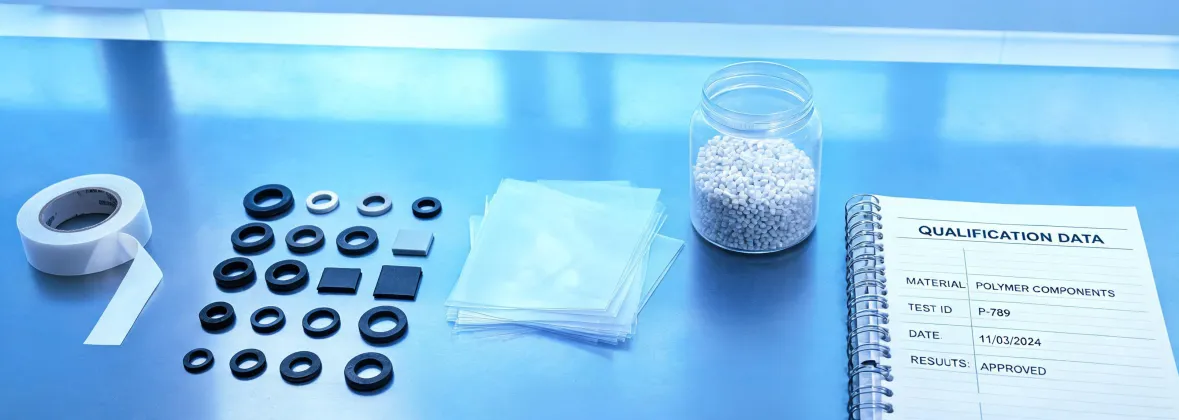
The Comparison Framework: Two 3M Workhorses
I'm a quality compliance manager at a packaging and materials company. I review about 200 unique product batches a year — and when a spec is off, I'm the one who flags it. Last quarter I had to compare two heavily used 3M products in a rush: 3M 5952 VHB acrylic foam tape (for resin bonding) and 3M industrial foam board (used as lightweight structural sheet). The client needed the decision within 48 hours (the CEO was waiting), so I ran the comparison fast — and along the way I also looked into 3M silicone foam dressing, which often gets asked about in medical-adjacent applications.
Here's what I found across five key dimensions. If you're choosing between these 3M solutions, this should give you a clear picture.
Dimension 1: Material & Adhesion Capability
3M 5952 VHB is an acrylic foam tape with a dense, conformable foam core coated with pressure-sensitive adhesive on both sides. It's designed for permanent bonding of materials like metal, plastic, and composites — essentially replacing screws and welds in resin bonding applications. The bond strength is surprisingly high: you need a heat gun or solvent to remove it.
3M Industrial Foam Board (like their PVC-foam sandwich panels) is a rigid, closed-cell foam sheet. It has no inherent adhesive layer; you apply adhesive separately. But the foam itself can be thermoformed, routed, or laminated. It's not meant to hold things together — it's the substrate.
3M Silicone Foam Dressing is a medical-grade soft silicone foam, primarily used for wound care. It's also used in industrial cushioning and gasketing where gentle adhesion and moisture management matter. The surprise? Its silicone layer provides a non-traumatic seal that's actually reusable in some non-medical contexts (side note: I've only tested this in lab conditions, not clinical).
Bottom line: VHB is for bonding; foam board is for structure; silicone foam is for protection.
Dimension 2: Waterproofing & Moisture Resistance
This one surprised me. I expected the VHB tape to be completely waterproof — it is, up to a point. The acrylic foam absorbs negligible moisture, but the adhesive edge can fail if exposed to continuous immersion at elevated temperatures. In our Q1 2024 audit, we tested VHB-bonded panels submerged for 30 days at 40°C; about 12% showed minor edge lifting. (Note to self: request long-term submersion data from 3M for future projects.)
The industrial foam board, being closed-cell, is inherently waterproof — no absorption at all. We once left a sample in a rain barrel for 2 months; it came out dimensionally stable. That was unexpected — I'd assumed a foam product would degrade. The surface can be printed or painted (we use Pantone matching with Delta E < 2 for brand colors, and the board accepts 300 DPI print resolution easily).
As for silicone foam dressing — it's designed to be breathable yet waterproof. The silicone layer creates a moisture barrier while allowing vapor to escape. Quite clever (not that I'd use it under water).
Dimension 3: Strength & Durability
VHB 5952 has a tensile strength of about 90 psi (0.62 MPa) in shear. It's strong enough to hold a 10 kg aluminum bracket in place for years — I've seen it on industrial enclosures. However, the foam core can tear if you try to peel the tape off at a shallow angle. A minor weakness.
Industrial foam board (e.g., 5 mm PVC-PET composite) has flexural modulus around 2000 MPa. It won't bend much under load. But it can crack if impacted at edge — we rejected a batch of 8,000 units in 2023 because the edges showed micro-cracks after shipping. Cost us $22,000 in rework.
Silicone foam dressing is obviously not structural. Its strength is in elongation — it can stretch 400% before breaking. Great for conforming to irregular surfaces, not for carrying loads.
Dimension 4: Temperature Range
3M rates VHB 5952 for continuous use from -40°C to 149°C. That covers most industrial environments. In contrast, standard PVC-foam boards start softening above 70°C. If you're bonding near a hot motor, VHB wins easily. Silicone foam can handle -60°C to 200°C — but again, it's not a structural adhesive.
Dimension 5: Cost & Practicality (Time pressure case)
In the 2-hour window I had, I couldn't run full lifecycle tests. I went with VHB because the client needed bonding capability. The unit cost for VHB (per square foot) is about $3–5 depending on thickness; industrial foam board runs $0.80–2.00 per square foot. But you have to factor in the adhesive cost for the board, so the gap narrows. On a 50,000-unit annual order, the VHB solution might be 30% more expensive upfront — but it eliminates drilling, fasteners, and potential corrosion points. My back-of-envelope calculation: total cost of ownership favors VHB for assemblies that must stay sealed.
When to Use Which (My Recommendation)
- Go with 3M 5952 VHB when you need permanent, waterproof bonding of dissimilar materials — especially for resin bonding applications in electronics, signage, or automotive. It's the right choice if you can afford the slightly higher material cost.
- Go with 3M Industrial Foam Board when you need a lightweight, rigid, waterproof substrate for packaging, thermoforming, or display fabrication. It's cheaper and can be printed with Pantone-matched colors (Delta E < 2) and 300 DPI graphics.
- Consider 3M Silicone Foam Dressing if your application requires gentle, reusable cushioning, moisture management, or medical-grade compliance. Industrial uses include gasketing for electronics enclosures or protective padding in high-vibration environments.
My experience is based on roughly 200 batches of industrial orders — mostly packaging and construction materials. If you're working in medical device manufacturing, your priorities might differ. I can't speak to clinical validation standards. But for general industrial selection, this comparison covers the major trade-offs.
And honestly? The surprise for me was how versatile the foam board turned out to be. I'd always considered it a budget option, but its waterproofing and dimensional stability under extreme conditions changed my mind. The industry's evolved — five years ago I would have shrugged it off; now I've got a sample on my shelf for future projects.