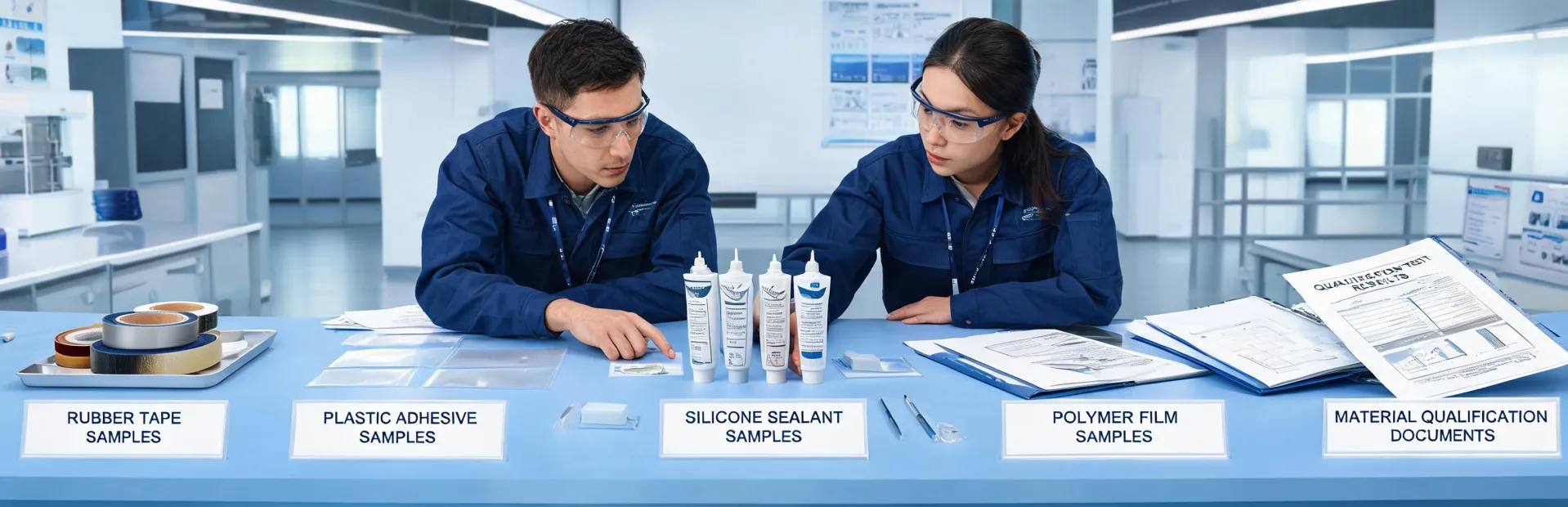
Material qualification workflow

Services

Material qualification support that starts before the product name becomes fixed.

The service page explains how 3m inquiries move from application facts to product matching, sample planning, document routing, and commercial follow-up. It is designed for sourcing, engineering, quality, and operations teams that need a repeatable way to compare rubber, plastic, adhesive, foam, film, and resin-adjacent options.

01

Application intake

We capture substrates, operating temperature, chemical exposure, movement, bond area, part geometry, conversion method, and target market. This keeps a request for 3m silicone tape, plastic adhesive, rubber splicing tape, cavity wax, or filler tied to real service conditions rather than a keyword alone.

02

Evidence mapping

The team maps the request to available material data, safety files, compliance statements, installation instructions, and customer approval needs. This is especially useful when a buyer must compare an incumbent product with an alternate material without disrupting a long approval chain.

03

Trial routing

Sample requests are planned around line timing, quantity, package format, shelf-life sensitivity, handling method, and internal test sequence. A controlled trial route reduces wasted samples and gives quality teams a clearer basis for accepting or rejecting a material choice.

Process

A numbered workflow for less ambiguous RFQs

1

Frame the application

Define the surface, environment, cycle, installation method, and failure mode. This prevents a broad catalog response from hiding the detail that will decide performance.

2

Shortlist material paths

Separate adhesive, rubber, silicone, film, foam, plastic repair, and resin-adjacent options so each path can be compared with the correct technical questions.

3

Collect documents

Prepare the documents buyers need for import, customer approval, regulated markets, and internal quality release before trial samples move.

4

Plan sample and quote

Align sample quantity, conversion notes, package size, lead time, expected annual volume, and commercial assumptions before the buying team asks for final pricing.

What the service is meant to guarantee

A 3m review should make the next decision easier to defend. The output may be a product shortlist, a request for missing engineering facts, a documentation package, or a recommendation to stop a path that cannot meet the application. For industrial buyers, that early discipline matters because material substitutions often carry hidden cost: rework, retesting, shelf-life waste, operator retraining, customer reapproval, and delayed production launch. The service therefore treats every inquiry as a linked technical and commercial decision. Procurement receives clearer comparison points, engineering receives measurable assumptions, and quality receives a stronger file for the next approval meeting.

Send the first brief with enough detail to route correctly.

Useful requests include the material currently used, the reason for change, temperature range, fluids or cleaning agents, surface material, bond or seal geometry, compliance markets, expected volume, and target decision date. If the request relates to 3m PPS, acrylic adhesive, foam tape, silicone spray, butyl tape, or plastic sheeting, include the process step where the material enters production.