It was a Tuesday morning, about 10:30 AM. I was in my office at the plastic sheet and roll supplier, just starting to review a new quote for a PVC order, when my phone started buzzing. The caller ID showed a number for a general contractor we'd worked with a few times before. Not a huge account, but decent.
I picked up, and the voice on the other end wasn't the project manager I usually dealt with. It was the owner, and he sounded a bit stressed.
"Listen," he said, without any small talk. "I have a client who is opening a flagship retail store in Fort Worth on Friday. It's a massive buildout. We are doing the final installation, and the interior designer just realized she messed up. She specified a standard acrylic sign mounting system, but the walls are this textured, almost fabric-like wall covering. We have a ton of heavy acrylic signs that need to be mounted by Thursday evening. We can't use regular acrylic adhesive. We need something specific, and we need it now."
He was talking fast, and I could hear the tension in his voice. This wasn't a normal request for PVC sheets or standard roll stock. This was a critical failure on a high-profile project.
Missing that deadline would have meant a penalty clause that I knew was significant. But for them, it was also about reputation. You can't delay a nationally advertised grand opening.
Triaging the Material Emergency
In my role coordinating material solutions for these exact scenarios, I've handled nearly 200 rush jobs in the last six years. The first thing I always do isn't to grab a product catalog. It's to ask a single, clarifying question: "What is the substrate, and what is the environmental condition?"
His answer told me everything I needed. He described a low-surface-energy wall panel, with a heavy texture that made it basically impossible for standard acrylic foam tape to get a good stick. He also mentioned that the store had large windows facing west, so the sun would bake the rear of the signs in the afternoon.
My brain immediately went to the 3M lineup. This wasn't a case for ordinary adhesive. This was a case for a very specific type of pressure-sensitive material engineered for a low-surface-energy, high-stress scenario.
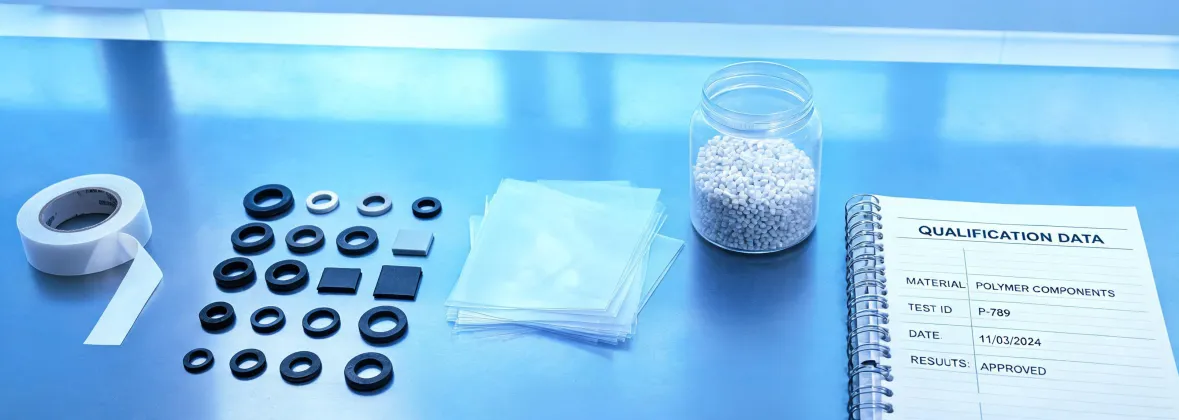
I thought about the 3M die-cut tape we carry. We stock a lot of die-cut tape components for fabrication, but his need was a specific thickness and width to span the texture. The tape needed to be thick enough to fill the void of the textured wall, but firm enough to prevent the heavy acrylic from sagging.
But there was another layer to this problem. The client's interior designer had also specified clear silicone sealant for the edges to prevent moisture ingress during cleaning. That's where a problem often pops up. Most people don't realize that uncured silicone can outgas and break down the adhesive bond of some tapes.
Our solution: We supplied a high-performance 3M acrylic foam tape and a specific 3M silicone tape application for a corner detail. But we briefed the installer on the chemical incompatibility risk.
Honestly, I'm not sure why some standard acrylic tapes fail so quickly on textured surfaces. My best guess is that it comes down to the micro-topography of the surface. You need a material with a high degree of conformability and a massive amount of adhesive mass to flow into those microscopic pores, not just the big visible texture.
The Role of Silicone Products in a Bind
Here is where the story gets a little more interesting. While we were coordinating the tape, the contractor mentioned he was also panicking about his own mistake. He had mis-ordered the rubber gaskets for the glass partition mounting frames. He had received a standard nitrile gasket, but the spec sheet from the glass manufacturer required a high-temperature resistant material specifically resistant to the cooking oils from the adjacent food court, plus it had to meet a strict fire code.
The part number on his manifest was for a 007 silicone o-ring and a length of specific silicone rubber. He asked if I could help source a substitute. This is a classic scenario.
I told him, essentially, don't cheap out on this. In my experience, switching from a specialty silicone to a cheaper alternative is the biggest penny-wise, pound-foolish mistake in this industry. I've seen quote managers save $50 on a high-temp silicone gasket for a machine, only to be forced to pay $2,000 in downtime later when it melted and caused a seal failure.
I was able to get him a 3M silicone tape in a specific thickness that could be applied to the glass channels to act as a compliant, high-temp seal. It wasn't a rubber o-ring, but its ability to form a tight, weather-resistant seal, combined with its excellent thermal properties, made it a viable emergency substitution for the static glass application.
We paid $120 extra in rush freight to get the tape and the o-rings in on a Wednesday morning express truck, on top of the $850 base cost for the die-cut pieces. It saved the $15,000 installation fee for his crew and prevented a $50,000 penalty charge for missing the store opening.
Why Material Choice Matters More Than Price
I spent that Thursday onsite because I wanted to see the install. It went smoothly, but watching them struggle to align the signs made me think about how often we see purchasing departments focus purely on the cost per square inch of plastic or the price of a 4x8 foam board.
A 4x8 foam board is a great base material for temporary graphics, but it has zero structural strength for mounting heavy objects. It's not a solution for everything. In this case, the actual mounting mechanism was the hero, not the display. The delay wasn't about getting the acrylic panels cut; it was about getting the interface material right.
This client came to us expecting us to sell them a box of generic mounting foam. If you ask me, that would have been a disaster. The designer didn't understand the need for a high-surface-energy adhesive. I'd rather spend 10 minutes explaining the difference between a standard PET sheet for a face shield and a specialized 3M die-cut tape for mounting than deal with mismatched expectations later.
The Final Verdict on the Solvent
We later got a request for a thermoplastic polyurethane case vs silicone comparison for a hand-held device they were launching as a customer giveaway. It was the same client, a different project.
That time, the question was less about quick delivery and more about long-term durability. In my opinion, this is a fascinating divide. Thermoplastic polyurethane (TPU) is a robust, abrasion-resistant material, but a true silicone case offers a certain tactile feel and a higher resistance to temperature extremes.
The client wanted a case that could survive a 6-foot drop onto concrete. The TPU is generally way better at impact absorption because it's stiffer and has a higher tear strength. But they needed it to be printed with a high-end graphic and fit snugly. My experience is based on about 200 mid-range orders for these types of components. If you're working with luxury or ultra-budget segments of the give-away market, your experience might be completely different.
We ended up using a TPU material for the main case because of its structural integrity and using a silicone insert for the internal shock padding. It was the perfect combination of rigidity and shock absorption. The rush order to switch materials resulted in a delay of two days, but the client's alternative was releasing a faulty product to 2,000 users.
The lesson I keep learning is to trust the material science. In this industry, the customer doesn't always know what they don't know. They see a plastic sheet or a roll of tape and assume it's all the same.
I've been doing this long enough to know that the $1 per die-cut piece is where the most cost-effective application lives. The real cost is in the labor to install it and the risk if it fails. You can look at the pricing on a basic spec sheet, but you cannot verify adhesion strength by just looking at a glossy photo.
Save the cheap foam board for the trade show floors, and don't try to re-engineer your windshield seal with a rubber band. Getting these materials right is about more than just finding the cheapest roll; it's about getting the right 3M silicone tape for the seal it needs to provide.