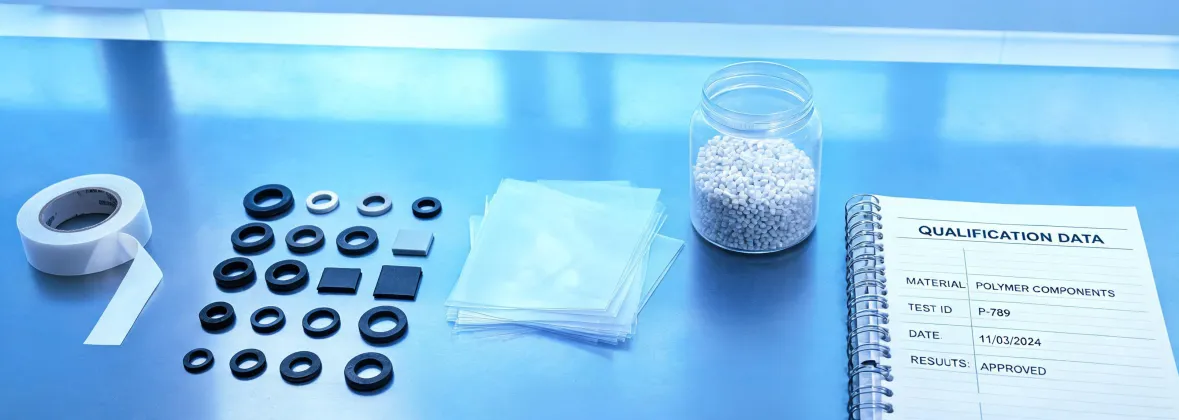
Back in March 2024, a client called at 9 PM needing 500 square feet of PET sheet for a trade show booth that opened in 36 hours. Normal turnaround for custom-cut sheet is 5-7 business days. We found a way to do it—cut, packed, and at the dock in 24 hours, with a $220 rush fee on top of the $840 base cost. The client's alternative was renting a booth a third of the size, which would have meant losing a $50,000 installation display contract.
I've worked at a plastic materials supplier for eight years, handling 200+ rush orders like that one. And the thing I've learned is that there's no universal "right" material choice for an emergency. Every rush order is different. A packaging client's problem is not an automotive client's problem, and the worst thing you can do is take advice meant for someone else's situation and apply it to yours.
Three material decisions come up more than anything else when buyers are under the clock. Let me walk through each one, and then I'll show you how to figure out which scenario you're actually in.
Scenario A: The Repair Shop That's Out of Body Filler
A collision repair client calls at 2 PM on a Thursday. There's a car on the lift, a customer expecting delivery in three days, and the body filler supply just ran dry. The question, which we get at least once a month: is 3M platinum body filler worth the premium, or can they get by with a budget alternative?
My honest answer, from watching this play out dozens of times: if the job is already in progress, pay the premium. 3M platinum body filler isn't magic (no filler is), but its consistency and cure time are documented and repeatable. When you're on the clock, predictability beats a $15 saving. The cost difference between a premium filler and a budget one is a rounding error compared to the cost of a re-do on a vehicle that's already in the booth.
Here's the "it depends" part. For routine jobs with a normal turnaround, budget fillers are usually fine. Most of the cheap stuff on the market will do the job in the right hands. But emergency situations expose the difference between "fine" and "reliable." I've personally seen three rush repairs fail because the tech switched to a discount filler mid-job. The pattern is the same every time: the filler cures unevenly, the tech has to sand it down and reapply, and a four-hour repair takes eight. That's a wasted afternoon, a missed deadline, and a client who doesn't care about the $15 you saved them.
The rule I use: if you have less than 72 hours to complete the repair, use the material you've tested before. 3M products like the platinum body filler are the safe call because their behavior is documented. Experimenting with a new budget product on a deadline is how misses happen.
Scenario B: Protective Cases—Foaming TPU or Silicone?
I get this question from case manufacturers at least once a month. The answer genuinely depends on what the case is being made for and who's going to buy it.
Foaming TPU (expanded thermoplastic polyurethane, if you're not familiar with the term) is the better choice when the job calls for:
- High impact absorption in cold temperatures
- Resistance to oils, greases, and industrial chemicals
- A lighter finished product—important for shipping costs as much as user comfort
Silicone cases, on the other hand, win when:
- The soft-touch feel is a selling point, not just a feature
- Color consistency is brand-critical (industry-standard tolerance is Delta E < 2 for brand colors, per Pantone guidelines)
- The case is as much about aesthetics as protection—think retail phone cases, not industrial tool housings
In my experience, the biggest mistake buyers make is picking silicone for industrial drop-protection applications because it "feels safer" in the hand. Silicone is a good material. But it's rarely the stronger structural option. Foaming TPU typically absorbs more impact energy per unit of thickness, which is why it's increasingly the go-to for rugged cases in logistics and field-service industries.
The old belief that "silicone is premium, TPU is budget" comes from the early smartphone case era. That thinking hasn't caught up with today's materials. Foaming TPU has closed the quality gap in a significant way, and for some applications, it's now the premium choice. I've had clients who insisted on silicone for two years switch to foaming TPU after one drop-test comparison showed TPU outperforming silicone in every impact metric below -10°C.
Scenario C: Nylon Lenses vs. Polycarbonate
The nylon lenses vs. polycarbonate debate is another one I'm asked to weigh in on regularly, mostly by people sourcing safety glasses, sports eyewear, or optical frames. There's no universal winner here—which is probably not the answer you were hoping for.
Nylon lenses are more flexible and resistant to cracking. A nylon lens can deflect under impact and return to shape; polycarbonate is more rigid and can develop stress fractures if the frame applies uneven pressure. For high-activity sports, kids' eyewear, and any use case where the frame is going to get twisted, nylon is usually the safer pick.
Polycarbonate, though, is the better optical performer in several meaningful ways. It has a higher refractive index, so you can make thinner lenses for the same prescription. It also holds coatings better—anti-scratch and anti-UV layers adhere more durably to polycarbonate than to nylon. That matters for industrial safety eyewear, where lens replacement means downtime and workers don't maintain their gear as well as they should.
Something that surprises buyers: polycarbonate is actually the more common choice for industrial safety specs, despite nylon's toughness advantage. The reason isn't just material performance—it's processing. Polycarbonate flows more predictably in injection molding, which means tighter tolerances and fewer rejected parts in high-volume runs. That efficiency shows up in unit cost and delivery speed, which matters when you're on a deadline. (Not that rushed orders ever produce rejected parts. They do. But we all pretend they don't.)
If you're stuck between the two, here's the test I use: does the lens need to flex, or does it need to resist chemicals and hold a coating? Flex → nylon. Coating, clarity, or thinness → polycarbonate.
How to Tell Which Scenario You're In
Once I lay out the three scenarios, the most common follow-up is, "okay, but which one applies to me?" Here's how I sort it when I'm triaging an actual rush order:
- What's the failure cost? If a wrong choice means a redo, a lost client, or a safety issue, pick the material with more documented performance data. In the three scenarios above, that's 3M platinum body filler for automotive repair, foaming TPU for impact-critical cases, and polycarbonate for coating-intensive optics. If the stakes are low, you can experiment.
- What's the actual timeline? Under 72 hours, don't try anything you haven't tested. A familiar material is always better than a "better" material you've never processed. Last quarter, a client needed 15,000 foaming TPU sheets in four days. We delivered because they'd already qualified the material. Had they asked for something new, the timeline would've been mathematically impossible.
- What does the end user actually touch? The difference between foaming TPU and silicone can be a tactile decision. The difference between nylon and polycarbonate can be a visual one. Your customer's customers will feel and see the product. Don't make the call from a spec sheet alone.
I'm not 100% sure this framework covers every outlier—there are always weird one-off cases—but it's saved us more times than I can count. Roughly speaking, we've delivered 95% of our rush orders on time using this triage method, including 47 rush jobs last quarter alone.
Why Efficiency Wins (Even When It Costs More)
One last thought. Every one of these decisions is fundamentally about efficiency. A buyer calls us for a rush order because an earlier inefficiency—in forecasting, supplier selection, or material specification—created a time crunch. Fixing the material decision solves today's problem. Fixing the process solves next month's.
There's something satisfying about a perfectly executed rush order. After all the stress and coordination, seeing it delivered on time and correct—that's the payoff. But the real win is when a client implements a buffer system and stops needing emergency orders entirely. We lose the rush fee, sure. But we keep the client, and that's the better trade. (Surprise, surprise.)
Switching to standardized material specs cut one packaging client's turnaround from 5 days to 2 days. The automated reorder process eliminated the data entry errors they used to have. That's what efficiency as competitiveness actually looks like on a production floor—not just faster, but fewer mistakes and fewer fire drills.
If you're in the middle of an emergency right now, I hope this helps you narrow your options. If you're not, maybe it's worth auditing your material decisions before you need to. Either way, the right answer under pressure isn't the "best" material. It's the one that fits your specific scenario.