-
Step 1: Define the Application Before You Name the Material
-
Step 2: Ask What's NOT Included
-
Step 3: Match Material Specs to Your Process, Not the Label
-
Step 4: Test a Small Batch Before You Scale
-
Step 5: Compare Total Cost of Ownership, Not Unit Price
-
Step 6: Budget for Consumables and Secondary Supplies
-
Step 7: Standardize Your Quote Comparison Format
-
Common Mistakes to Avoid
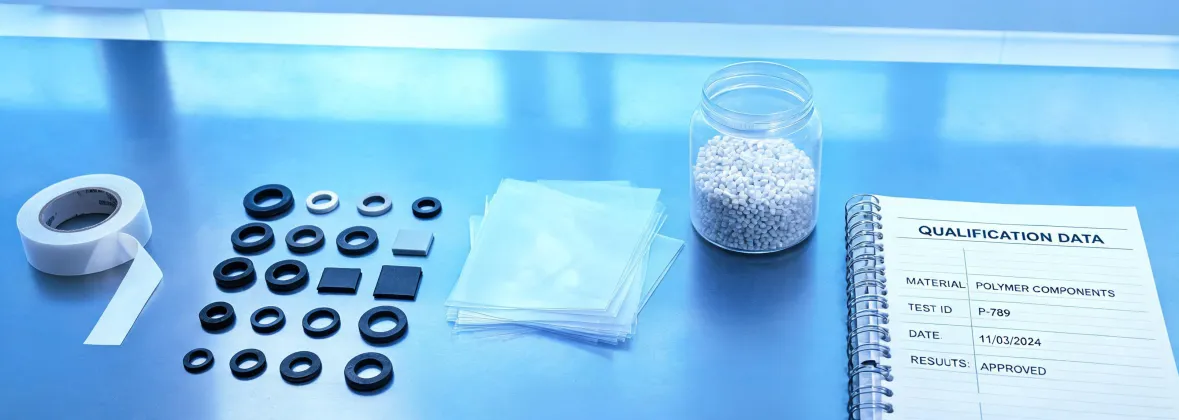
I'm a procurement manager at a mid-sized packaging company. For the past six years, I've managed our raw materials budget — about $180,000 a year — and tracked every order in our cost system. I've bought PVC, PET, PS, ABS, PP, acrylic sheet and roll, plus a whole list of secondary supplies like 3M acrylic adhesive, 3M kind removal silicone tape, and rubber block. I've also made mistakes that cost me real money.
This checklist is for anyone who buys plastic sheet or roll products for a living. It's the process I use when the pressure is on to cut costs without cutting quality.
There are seven steps. Do them in order, and you'll avoid most of the hidden traps I've hit over the years.
Step 1: Define the Application Before You Name the Material
Never start with a material name. Start with what the part has to do.
A customer once asked me about the difference between polycarbonate lenses vs plastic for a clear display housing. Before giving a price, I asked: will it be exposed to impact? Will it be outdoors? What about UV? Turns out it was an indoor point-of-sale display — standard PET or acrylic worked fine at about 40% less cost. Polycarbonate would have been over-engineering.
If the sheet is going to be printed, also confirm the resolution your artwork requires. Commercial offset printing needs 300 DPI at final size; large-format posters can get away with 150 DPI. That affects your surface finish and coating requirements. Reference: industry standard print resolution guidelines.
Step 2: Ask What's NOT Included
The single most valuable question in procurement: 'What's NOT included in this price?'
Plastic sheet suppliers can hide a lot in fine print: cutting fees, pallet charges, setup fees, color matching, packaging, minimum order bumps. In our industry, tooling and die-cutting setup fees typically run $50–200 depending on complexity — similar to setup fees in commercial printing, where plates cost $15–50 per color. (Reference: pricing structure data from major online print vendors, January 2025.)
Like most beginners, I used to pick the lowest unit price. I learned that lesson the hard way when a 'cheap' quote ended up 12% higher after adding cut charges and freight. Now I ask the question before I even look at the unit price.
Step 3: Match Material Specs to Your Process, Not the Label
Labels can be expensive. A client once asked for medical grade polypropylene because they thought it was a safer default. But their application was a laundry basket. Nothing in their process required medical certification. The premium for that label was 15% and we didn't need it.
Don't assume everyone means the same thing by 'standard tolerance.' We both said 'standard' — I meant ±0.1 mm, the supplier meant ±0.5 mm. Discovered this when the first batch didn't fit our mold. That cost us $1,200 in rework. Now I get every tolerance in writing.
If color consistency is important, agree on a Delta E tolerance before production. Brand-critical colors usually require Delta E < 2 according to Pantone guidelines. A good supplier will match a Pantone reference within that range.
Step 4: Test a Small Batch Before You Scale
Even with the right spec on paper, test it in your process. For one job, we needed a 3M kind removal silicone tape to protect a surface during thermoforming. We ordered a sample roll first — $28. It failed our heat test. If I'd bought the full case, that would have been a $700 disaster.
Same logic applies to raw sheet. If you're switching suppliers or materials, run a small batch through your thermoformer, cutter, laminator, or printer. The sample cost is a rounding error compared to a failed production run.
Step 5: Compare Total Cost of Ownership, Not Unit Price
Unit price is the most misleading number in procurement. I compare total cost per good part, not cost per kilo.
Example from Q2 2024: I was buying PET sheet for a recurring order. Supplier A quoted $1.10/kg with everything included. Supplier B quoted $0.95/kg but charged $120 setup, $80 cutting per pallet, and freight on two separate deliveries. When I calculated the annual TCO for a $7,200 order, Supplier B was actually 6% more expensive. That's the kind of surprise you only see when you build a full cost spreadsheet.
It also happens the other way. Never expected the most expensive quote to have the lowest TCO. But the vendor who itemized everything upfront — including packaging and delivery windows — turned out to be the cheapest once all costs were counted.
Step 6: Budget for Consumables and Secondary Supplies
The sheet is only one line item. Your process usually needs adhesives, tapes, and backing materials, and those have their own hidden costs.
For our lamination line, we use 3M acrylic adhesive. The unit price is higher than generic alternatives, but we get more usable coverage per drum and it holds through our heat tests. Cheap adhesive costs less on paper, but it failed at a rate that made our overall scrap percentage jump.
Same thing with rubber block. The cheapest rubber block pads degrade when they hit solvent; we replaced them every few months. Denser rubber costs about 30% more upfront but lasted three times longer. That's a no-brainer once you see the lifespan data.
Step 7: Standardize Your Quote Comparison Format
If you're serious about cost control, you need to compare apples to apples. Build a standard spreadsheet with these columns:
- Material grade and specific certification (e.g., medical grade polypropylene)
- Tolerance and thickness
- Color/UV requirements
- Quantity and unit price
- Setup fees and tooling
- Cutting/fabrication fees
- Packaging and pallet charges
- Freight and delivery terms
- Payment terms and lead time
Put every quote into the same format. If a supplier leaves a box blank, ask. If they refuse to answer, that's a red flag.
Common Mistakes to Avoid
- Don't assume a certification is free or even needed. 'Medical grade' sounds great until you realize you're paying for paperwork your product doesn't require.
- Don't take 'standard' for granted. Get measurements and tolerances in writing.
- Don't ignore communication speed during quotes. If a vendor takes four days to answer a simple question, your order will likely be late too.
Bottom line: The cheapest quote is rarely the cheapest order. In six years of buying plastic sheet and roll, I've learned to focus on total cost, transparent pricing, and verified specs — not the lowest number at the top of a quote. Use this checklist, ask the question 'what's NOT included?', and you'll save more than you might think.