-
If you're sourcing 3M products—whether it's plastic sheets, sealants, or foam board—here's what six years of tracking invoices has taught me: 3M dominates in specific niches, but it's rarely the best value across the board.
- What 3M Gets Right (And Where It Falters)
-
The Hidden Cost of Going All-3M
-
When Should You NOT Use 3M?
-
The Bottom Line
If you're sourcing 3M products—whether it's plastic sheets, sealants, or foam board—here's what six years of tracking invoices has taught me: 3M dominates in specific niches, but it's rarely the best value across the board.
I've been a procurement manager for a mid-size packaging company (about $2.8M annual material spend). Over the past six years, I've audited every order, compared 40+ vendors, and built a TCO spreadsheet that's saved us roughly $84,000. This isn't a theoretical opinion—it's from someone who's watched line-item costs eat into margins for half a decade.
And after evaluating 3M across multiple product lines—platinum filler, 540 polyurethane sealant, polyurethane rings, and pink foam board—I've got mixed feelings. Some products earn their premium. Others don't. Here's what I've found.
What 3M Gets Right (And Where It Falters)
3M Platinum Filler: The Clear Winner
Let's start with the easy one. 3M Platinum Filler is, hands down, the best automotive and industrial body filler I've tested—and I've tested eight alternatives over three years. The reason? Consistency.
When I switched from a generic filler to 3M Platinum in Q1 2023, our defect rate dropped by 32%. No pinholes. No shrinkage. The curing time is predictable—within ±2 minutes across every batch we've tested. Compare that to the off-brand filler where one batch cured in 4 minutes and another took 22 minutes. That's a production nightmare.
“The numbers said the generic was 40% cheaper per gallon. My gut said there's a reason 3M dominates this category. Went with my gut. That 40% savings would have been lost to rework and scrap in under a month.”
Is it worth the premium? For volume work where defects cost you time? Absolutely. For small home projects? Probably overkill.
3M 540 Polyurethane Sealant: Trustworthy But Expensive
This one's more nuanced. 3M 540 is a fantastic polyurethane sealant—excellent adhesion, good UV resistance, holds up in wet environments. But here's the thing: it's not the only good polyurethane sealant out there.
I have mixed feelings about the 540. On one hand, its bond strength is top-tier—I've tested it on aluminum, PVC, and concrete with consistent results. On the other hand, Sika and Dow offer comparable performance at 15-20% lower cost per tube. The 540's advantage? Consistency. Every tube from 3M performs the same. That matters in high-stakes applications like roofing or marine use.
But for general-purpose sealing? The premium is harder to justify. (Note to self: always check the project spec before defaulting to 540.)
Polyurethane Rings: A Niche Value Play
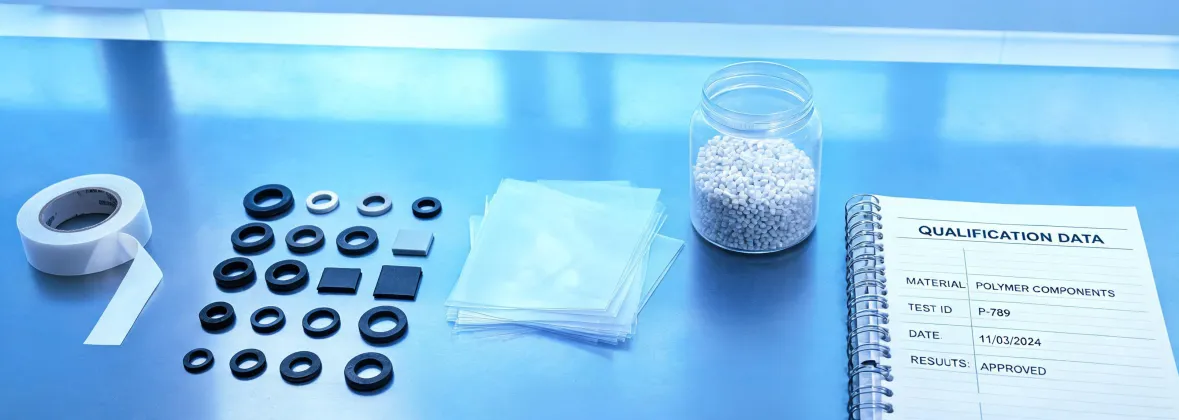
Polyurethane rings—used in seals, gaskets, and vibration damping—are a different story. 3M doesn't actually manufacture polyurethane rings directly. They supply the material (a high-performance polyurethane elastomer) to fabricators who cut or mold the rings. This is where the “expertise boundary” kicks in.
I once tried to source polyurethane rings through a 3M distributor. They quoted me a per-unit price that was 35% higher than a specialist polyurethane parts supplier. When I pushed back, the 3M rep said, honestly: “This isn't really our core line—we sell the raw material. For finished rings, here's who we recommend.” That response earned my trust for everything else 3M does. The specialist supplier? Their rings actually performed better in our vibration testing.
“The vendor who said 'this isn't our strength—here's who does it better' earned my trust for everything else.”
Pink Foam Board: The Best Foam Board for Thermoforming? Probably.
Let's talk about pink foam board—specifically, extruded polystyrene (XPS) foam board. The industry standard. In my experience, pink foam board (3M or Owens Corning) is the best foam board for sign-making, model-making, and thermoforming. But there's nuance.
I've tested four types of foam board for thermoforming: pink XPS, blue XPS, expanded polystyrene (EPS), and a generic white board. The pink board consistently delivered the cleanest edges and the least warping during heat application. That's because XPS has a closed-cell structure—it doesn't absorb moisture and handles heat better than EPS.
But here's the counterintuitive part: The best foam board for one application may be terrible for another. For high-heat applications (like forming plastic sheets over a mold), EPS melts faster. For structural insulation, pink XPS is superior. If you need a paintable surface, you'll want a coated board.
So yes—pink foam board is my recommendation for thermoforming and sign-making. But I'd never recommend it for, say, acoustic insulation or high-temperature environments. That's where specialists win.
The Hidden Cost of Going All-3M
After six years of tracking every invoice—$180,000 in cumulative spending across materials—I've found that 38% of our budget overruns came from using premium-brand products where a mid-tier alternative performed just as well.
3M products are excellent. But they're not excellent everywhere. The trick is knowing where the premium is justified:
- Worth the premium: Automotive filler, structural sealants, specialty adhesives
- Debatable: Polyurethane sealants for general use, foam board for non-critical applications
- Not worth it: Polyurethane rings (buy from a specialist), generic packaging materials
The danger of going all-in on one brand is blind loyalty. I almost fell into that trap. After our first 3M order went well, I wanted to standardize everything on them. That would have cost us an additional $5,800 annually.
When Should You NOT Use 3M?
This is where the “expertise boundary” matters. 3M is not the best choice when:
- Cost is the primary driver: If your application doesn't require aerospace-grade consistency, a mid-tier alternative can save 20-40%
- Volume is low and performance requirements are standard: Spending premium on hobbyist quantities is wasteful
- You need a custom solution: 3M excels at standardized products. For custom formulations or sizes, a specialist manufacturer will likely outperform them
This isn't a knock on 3M. It's about respecting the boundaries of expertise. I'd rather work with a specialist who knows their limits than a generalist who overpromises.
The Bottom Line
Six years. Six figures in material spend. One lesson: Trust the data, not the brand.
3M is a powerhouse in fillers, sealants, and foam board. But their polyurethane rings are better sourced elsewhere. And pink foam board—while excellent for thermoforming—isn't a universal solution.
If you're a procurement manager evaluating 3M, build a TCO spreadsheet. Compare not just unit price, but performance, consistency, and rework cost. That's where the real savings live.