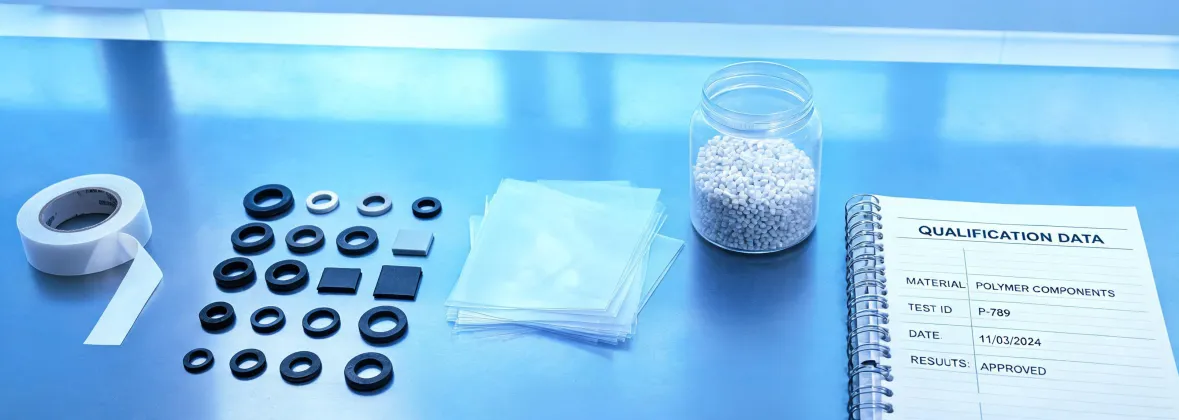
Who This Checklist Is For
If you’re sourcing 3M plastic adhesives, 3M premium filler, plastic resin shed panels, door rubber seals, or deciding between silicone vs nitrile materials, this checklist is for you. I review roughly 200 unique industrial items every year as a quality compliance manager. Over 4 years I’ve rejected about 15% of first deliveries—mostly because specs didn’t match what was promised. This is the exact five-step process I use now to avoid those headaches.
Step 1: Verify Material Specifications Against Samples
When I ordered a batch of 3M plastic adhesive last year, the data sheet claimed a viscosity of 8000 cP. The actual product felt more like 5000 cP—thin enough to drip off vertical surfaces. We caught it because I always request a pre-shipment sample. Don’t rely on the spec sheet alone. Pull a sample, measure key properties, and compare. For 3M premium filler, check consistency (smooth vs gritty). For door rubber, shore hardness matters—silicone usually sits at 40-60A, nitrile at 60-80A. Get a durometer reading.
Step 2: Evaluate Environmental Resistance (Silicone vs Nitrile)
This is where many buyers slip. Silicone vs nitrile is not just a price difference—it’s a performance tradeoff. I’ve seen door rubber seals made of nitrile crack after two winters because the spec didn’t specify UV resistance. Silicone handles temperature extremes and ozone better; nitrile resists oil and fuel better. For outdoor plastic resin shed applications, silicone is usually the smarter choice, but for gaskets near machinery, nitrile wins. Always ask the vendor: “What’s the operating temperature range? Any accelerated aging test data?” If they can’t provide it, that’s a red flag.
Step 3: Check Dimensional Tolerances
I once rejected an entire order of plastic resin shed panels because the thickness varied ±0.8mm across just ten sheets. The vendor claimed it was “within industry standard.” But our assembly jig couldn’t handle that much deviation. Set clear tolerances upfront—I now write ±0.2mm for sheet goods, ±0.5mm for extruded door rubber profiles. Measure at least 5 random samples from the batch. Don’t assume consistency; it rarely is on the first run.
Step 4: Surface Quality and Clarity
For 3M plastic adhesive used in clear laminations or 3M premium filler intended for cosmetic repairs, surface defects matter. A batch of PET sheet we received looked perfect under warehouse lighting, but under a backlight we found micro-bubbles across 30% of the sheets. The cost? A $22,000 redo. Use a light table or a simple edge-lighting test. For door rubber, check for flash lines, sink marks, or uneven texture. Silicone extruded parts tend to have better surface finish than nitrile, but both can have porosity if the compound isn’t properly de-gassed.
Step 5: Validate Performance Claims with FTC Guidelines
Every vendor says their product is “waterproof,” “UV stable,” or “high clarity.” Per FTC advertising guidelines (ftc.gov), those claims must be substantiated. I’ve learned to ask: “What test standard did you use? Can you share the report?” One supplier claimed their 3M premium filler was “auto-body grade,” but when I tested adhesion on primed metal, it peeled off under 5 pounds of pull. That failure cost us a customer relationship. If a claim sounds too good, reverse-verify it with a simple in-house test. It’s cheaper than a field failure.
Common Mistakes to Avoid
- Taking price at face value. The vendor who lists all fees upfront—even if their total looks higher—usually costs less in the end. Always ask “What’s NOT included?”
- Skipping sample approval. A photo or data sheet is not enough. I reject roughly 1 in 7 first batches because physical samples reveal discrepancies.
- Choosing silicone vs nitrile based on price alone. I made that mistake on a door rubber order and ended up replacing 8,000 units. The “cheaper” nitrile hardened in 11 months outdoors.
- Not tracking dimensional drift. Even from the same supplier, tolerances change between batches. Set a baseline and recheck every order.
Honestly, I don’t have hard data on how often these issues happen industry-wide. My sense, based on 200+ reviews per year, is that about 10-12% of first deliveries have at least one of these five problems. This checklist won’t eliminate risk, but it’ll catch the big ones before they become $20k redo situations.