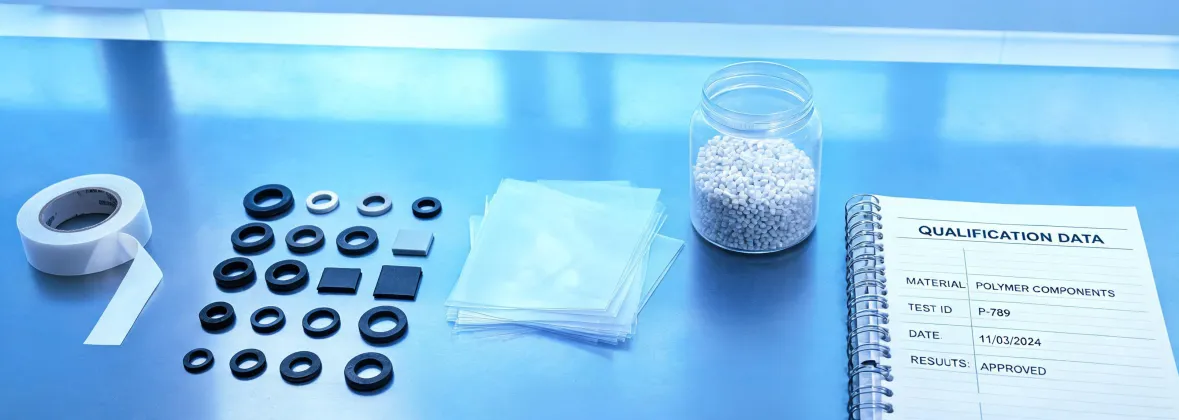
I manage material ordering for a mid-sized plastics fabrication shop—roughly $400k annually across a dozen or so vendors. When I took over purchasing in 2020, one of the first head-scratchers was the difference between thermoplastic polyurethane (TPU) filament and polyurethane protective tape. Our engineers kept asking for both, and I kept thinking: aren't they the same thing? Spoiler: no.
This article is for other buyers like me—people who need to understand the materials they order, not just the prices. Let's break down the real differences, based on what I've learned ordering 3M polyurethane protective tape and comparing it with TPU options.
What We're Comparing: TPU Filament vs. Polyurethane Protective Tape
On the surface, both materials share a polyurethane base. But they serve fundamentally different applications. Thermoplastic polyurethane filament is a 3D printing material—a spool of flexible, durable plastic filament used for additive manufacturing. 3M polyurethane protective tape is a pressure-sensitive adhesive tape, typically with a polyurethane top coat, designed to protect surfaces from abrasion, impacts, and chemicals.
The confusion often comes from the "polyurethane" label. But the way I see it, it's like comparing apples and… well, a different kind of apple. Both are fruits, but you wouldn't use one to make a pie if the recipe calls for the other. That said, there are overlapping performance characteristics worth understanding.
"It's tempting to think you can just swap TPU filament for polyurethane tape. But identical chemistry doesn't mean identical application. The form factor—and how it's applied—changes everything."
Dimension 1: Material Form and Application
This is the most obvious difference, but it's worth stating clearly. TPU filament comes on a spool, typically 1.75mm or 2.85mm in diameter. You feed it into a 3D printer, which melts it and extrudes it layer by layer to create a 3D object. 3M polyurethane protective tape comes as a roll of pre-formed tape, with an adhesive backing. You apply it directly to a surface—think bumper guards, edge protectors, or chemical-resistant overlays.
The process difference is massive. With TPU filament, you're manufacturing a part from scratch. With protective tape, you're applying a protective layer to an existing surface. In my experience, that makes protective tape more practical for retrofitting or field repairs—but filament gives you more design freedom if you're building something new.
My Takeaway
If you need a custom-shaped protective gasket for a prototype machine, TPU filament is your friend. If you need to protect a high-traffic floor surface from scuffs, grab the 3M tape. Different tools for different jobs.
Dimension 2: Mechanical Performance in Real-World Use
Here's where it gets interesting—and a bit counterintuitive. 3M's polyurethane protective tape is engineered for specific performance metrics: abrasion resistance, impact absorption, and chemical resistance. It's been tested and certified for applications like marine environments (think 3M Marine Premium Filler or deck protection). TPU filament, on the other hand, varies wildly by brand and formulation.
In our shop, we tested a TPU filament for making flexible jig components. The results were okay—decent flexibility, good layer adhesion. But when we tried using it as a surface protection layer (applying printed sheets to a metal surface), it delaminated within weeks. The 3M tape, applied properly, held up for over a year in the same environment.
The difference, as far as I can tell, comes down to the adhesive system and the specific reinforcement in the tape. TPU filament is a thermoplastic—it can be remelted and reshaped. That's great for printing, but it means it's inherently less durable in a static protection role compared to a cured or cross-linked formulation.
"The 'all polyurethane is equal' advice ignores the difference between a thermoplastic that can be remelted and a thermoset or cross-linked material that's chemically set. They behave differently under stress."
My Takeaway
For protective applications (abrasion, impact, chemicals), 3M polyurethane tape is generally superior to most TPU filaments. But manufacturing applications (custom parts, flexible prototypes, low-run production) are where TPU filament shines. Don't confuse the two.
Dimension 3: Cost and Procurement Complexity
From a buyer's perspective, this is where things get real. 3M polyurethane protective tape is a specialty industrial product. Pricing is typically higher than commodity tape (think $15-50 per roll, depending on width and length), and lead times can be 2-4 weeks for non-standard sizes. TPU filament is more accessible—available on Amazon or from 3D printing suppliers for $20-60 per kilogram spool, often with next-day delivery.
But the cost comparison isn't straightforward. A kg of TPU filament might yield several printed parts, but a roll of 3M tape might protect a much larger surface area. You need to calculate cost per protected area, not just upfront price.
Another factor: thermal polyurethane vs. thermoplastic. Pure polyurethane (like the kind used in paints or coatings) is often a liquid that cures. TPU is a solid that melts. In my experience, the procurement chain for TPU is simpler because it's a standard consumer/industrial product, while 3M tape often requires certified distributors and minimum order quantities.
My Takeaway
TPU filament is cheaper and easier to source. But if you need certified performance (marine, aerospace, medical), the 3M tape's traceability and testing justify its cost. I learned this the hard way when our prototype with printed TPU guards failed during a critical customer demo.
So Which One Should You Choose?
I've gone back and forth on this more times than I'd like to admit. Here's my practical guide, based on actual projects I've managed:
- Choose 3M polyurethane protective tape when: You need proven surface protection (abrasion, chemical, impact), especially in demanding environments (marine, industrial, heavy traffic). The 3M brand brings reliability and specification sheets that make your boss happy.
- Choose TPU filament when: You're prototyping, making custom or low-volume parts, or need a flexible 3D-printable material. It's excellent for jigs, fixtures, custom handles, or proof-of-concept parts that will eventually be produced in hard plastic or metal.
- Consider both when: You have a two-part problem. For example, a printed TPU bracket that holds a 3M tape strip in place. We've done this on custom robotics projects, and it worked beautifully.
If you ask me, the biggest mistake is assuming they're interchangeable. They're not. But understanding when to use each—and when to use both—can save you time, money, and a conversation with your VP about why a prototype failed.