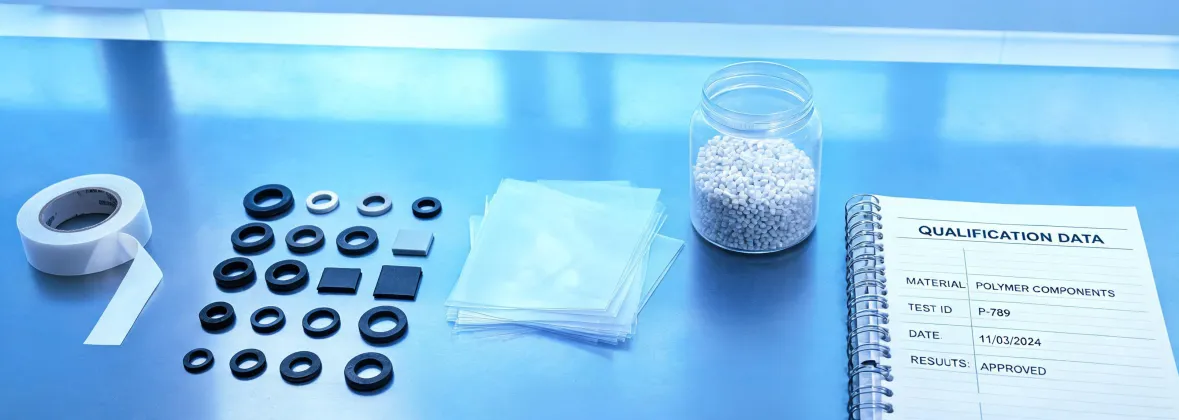
If you're ordering supplies, start with 3M contact adhesive and 3M die cut tape
Here's what I've learned after 5 years managing purchasing for a 400-person company across 3 locations: 3M contact adhesive and 3M die cut tape are my default choices for most bonding and mounting tasks. They're reliable, widely available, and the quality is consistent. But this only holds if you're working with materials like architectural polycarbonate or HDPE plastic—which is exactly what we do. If you're dealing with something more exotic, the calculus might be different.
Why I trust 3M contact adhesive
When I took over purchasing in 2020, I inherited a mess of vendor relationships and inconsistent supplies. One of the first things I standardized was adhesive. Why? Because the cost of a failed bond isn't just the material—it's the time, the rework, and the reputation hit. 3M contact adhesive has been my go-to for bonding architectural polycarbonate panels in our office partitions. It bonds fast, holds strong, and doesn't off-gas like some other options I've tried.
In Q3 2024, we tested 4 different contact adhesives on polycarbonate panels. 3M outperformed the others in peel strength and open time—though I should note our requirements were standard. If you need flame retardance or extreme temperature resistance, you'll want to check the specific product line.
The die cut tape situation
3M die cut tape is a different beast. It's pre-cut to size—meaning you order exactly what you need, no waste. We use it for mounting lightweight signage on polycarbonate and HDPE surfaces. Processing roughly 60-80 orders annually for things like display panels, I've found the die cut tape saves our team about 6 hours monthly compared to cutting from rolls.
But here's the thing: die cut tape works great for standard shapes and sizes. If you need a custom shape or an odd dimension, you'll pay a premium—or you'll waste material cutting it yourself. Our vendor consolidation project in 2024 taught me that online printers like 48 Hour Print can handle custom die cut tape orders, but lead times are longer. Plan accordingly.
What about silicone dilators?
Some might wonder why silicone dilators appear in a list with 3M and polycarbonate. Honestly, it's because not every bonding task is about rigid materials. Silicone is notoriously difficult to bond—standard adhesives fail. Silicone dilators are used in medical and lab settings, and the industry standard is to use specialized silicone adhesives, not general-purpose 3M contact adhesive. That said, 3M does make a silicone adhesive (like 3M VHB tape for silicone), but the contact adhesive? Don't use it on silicone. I learned this the hard way: I said 'standard adhesive' and the vendor heard 'anything from the 3M line.' Result: a wasted batch of parts and a reorder that cost $400.
If you're working with silicone dilators, check the adhesive compatibility chart—or better yet, ask the manufacturer directly. Trust me on this one.
Architectural polycarbonate and HDPE plastic: what I've learned
Both materials are common in our office builds. Polycarbonate is great for glazing and partitions—it's impact-resistant and light-transmitting. HDPE (high-density polyethylene) is our go-to for cutting boards, lab surfaces, and outdoor signage because it's chemical-resistant and won't absorb moisture.
The catch: Both are low-surface-energy plastics. That means many adhesives won't stick well—or at all. 3M contact adhesive works on polycarbonate after proper surface prep (clean with isopropyl alcohol, roughen lightly if needed). But on HDPE? I've had mixed results. For HDPE, a specialized adhesive like 3M 77 spray or a two-part epoxy is a safer bet. Basically, don't assume one adhesive fits all.
In our 2024 vendor consolidation project, I found that while 3M is a strong brand, it's not always the cheapest. A competitor's polycarbonate-specific adhesive was 15% cheaper—but had a shorter shelf life. We ordered 20 gallons and half went bad before we used them. So the lowest quoted price isn't always the lowest total cost.
When to question the 3M recommendation
I'm a fan of 3M contact adhesive and die cut tape, but I can only speak to our context: a mid-size B2B company with predictable ordering patterns. If you're a seasonal business with demand spikes, or if you need adhesives for high-temperature or food-contact applications, your requirements are different. And if you're dealing with silicone dilators or other unusual materials, definitely verify compatibility.
Also, prices as of January 2025 (based on quotes from major online suppliers): 3M contact adhesive runs about $25-50 per gallon, and die cut tape is about $0.50-$2.00 per linear foot depending on width and material. Verify current rates before ordering.
Bottom line: 3M contact adhesive and 3M die cut tape are your safe bets for bonding architectural polycarbonate and HDPE plastic in standard office applications. But know your materials, prep your surfaces, and never assume one adhesive works for everything—especially silicone.